An illustration system and editorial design spanning website imagery, chapter dividers and detailed publications.
For Women’s Initiatives for Gender Justice, I developed website illustrations and a reusable collection of visual elements, alongside report design over several years. The work connects expressive imagery with carefully structured publications, supporting the organisation’s communication across digital and editorial formats.
Clarity, with care.
The work brings together two different communication needs: a distinctive visual presence for the website and a clear structure for detailed publications. Across both, the design needs to support the material while respecting its complexity and subject matter.
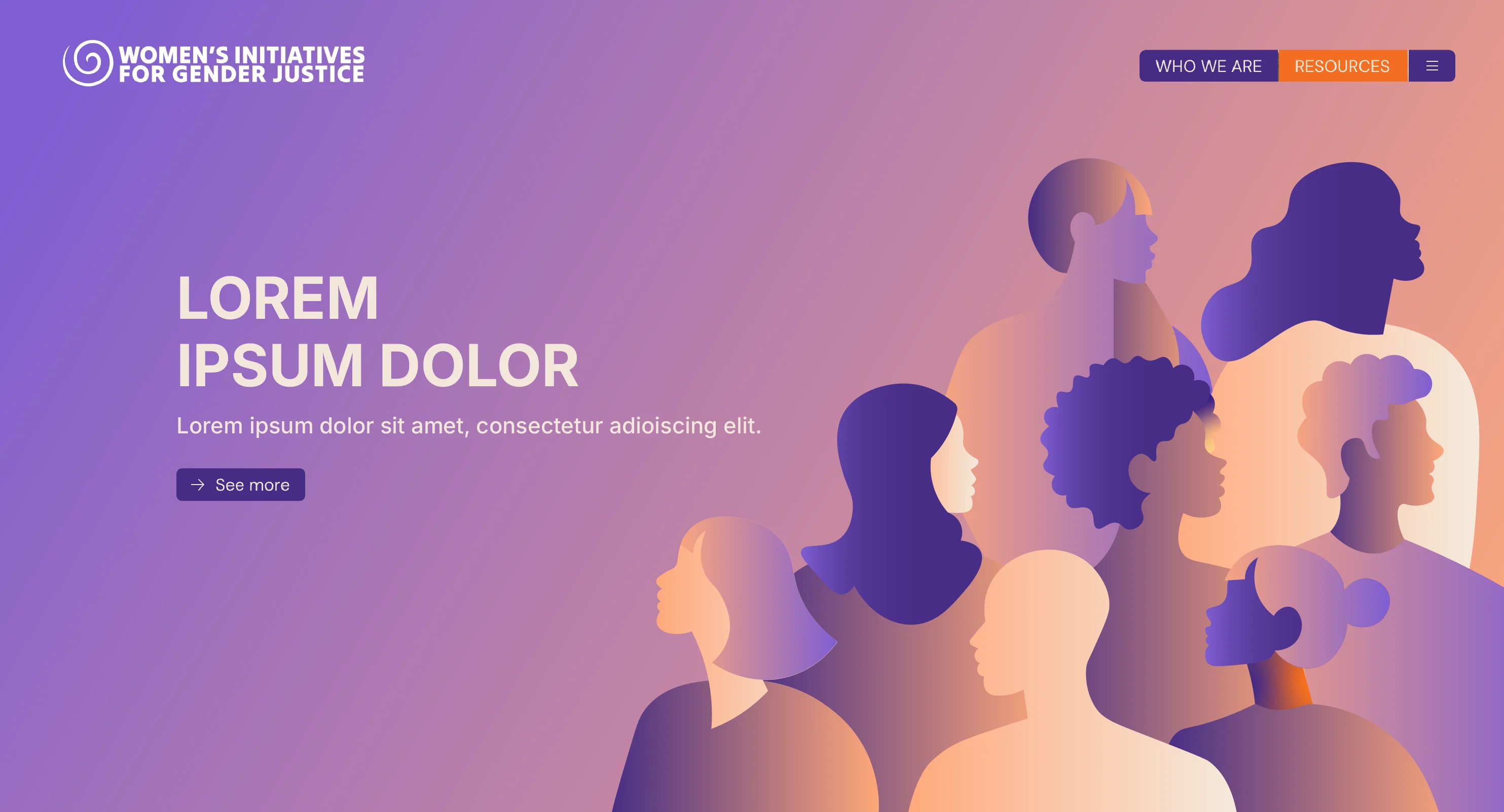
I developed a family of illustrations combining simplified human figures, symbolic objects and flowing forms. A consistent palette and gradient treatment connect the compositions, while changes in scale and arrangement give each subject its own visual expression.
The system brings people, institutions and abstract ideas into the same visual world, with compositions adapted to different topics and formats.
Original illustration: a figure exploring oversized pages
Website illustration for the Sexual violence pageWebsite illustration: raised voices
Website illustration for the Gender apartheid page
From an existing palette to an illustration language.
Women’s Initiatives for Gender Justice already had an established brand palette. The open question was how those colours should work inside illustration: which colour leads, how they blend into gradients, and how much contrast figures need to stay readable.
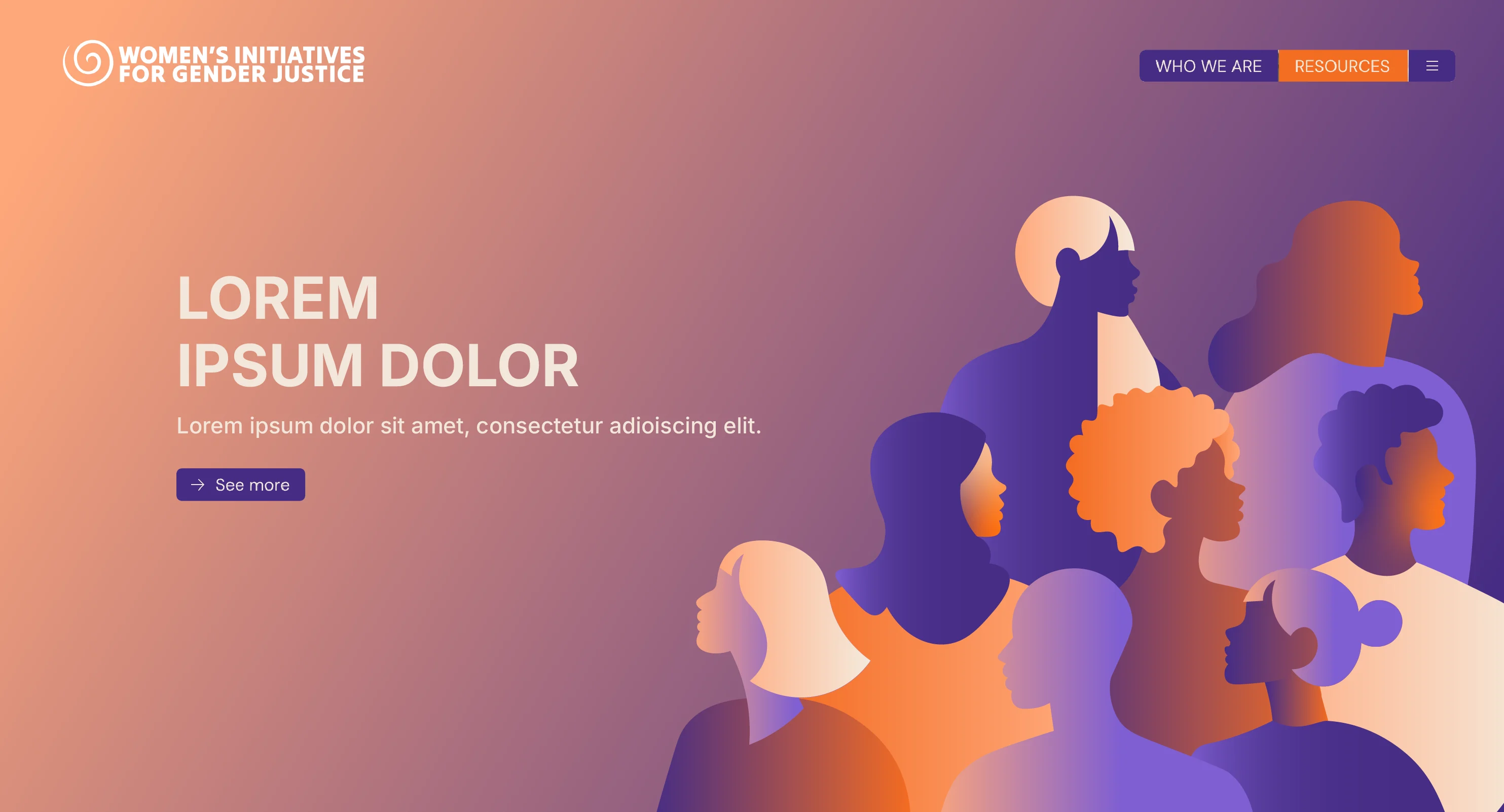
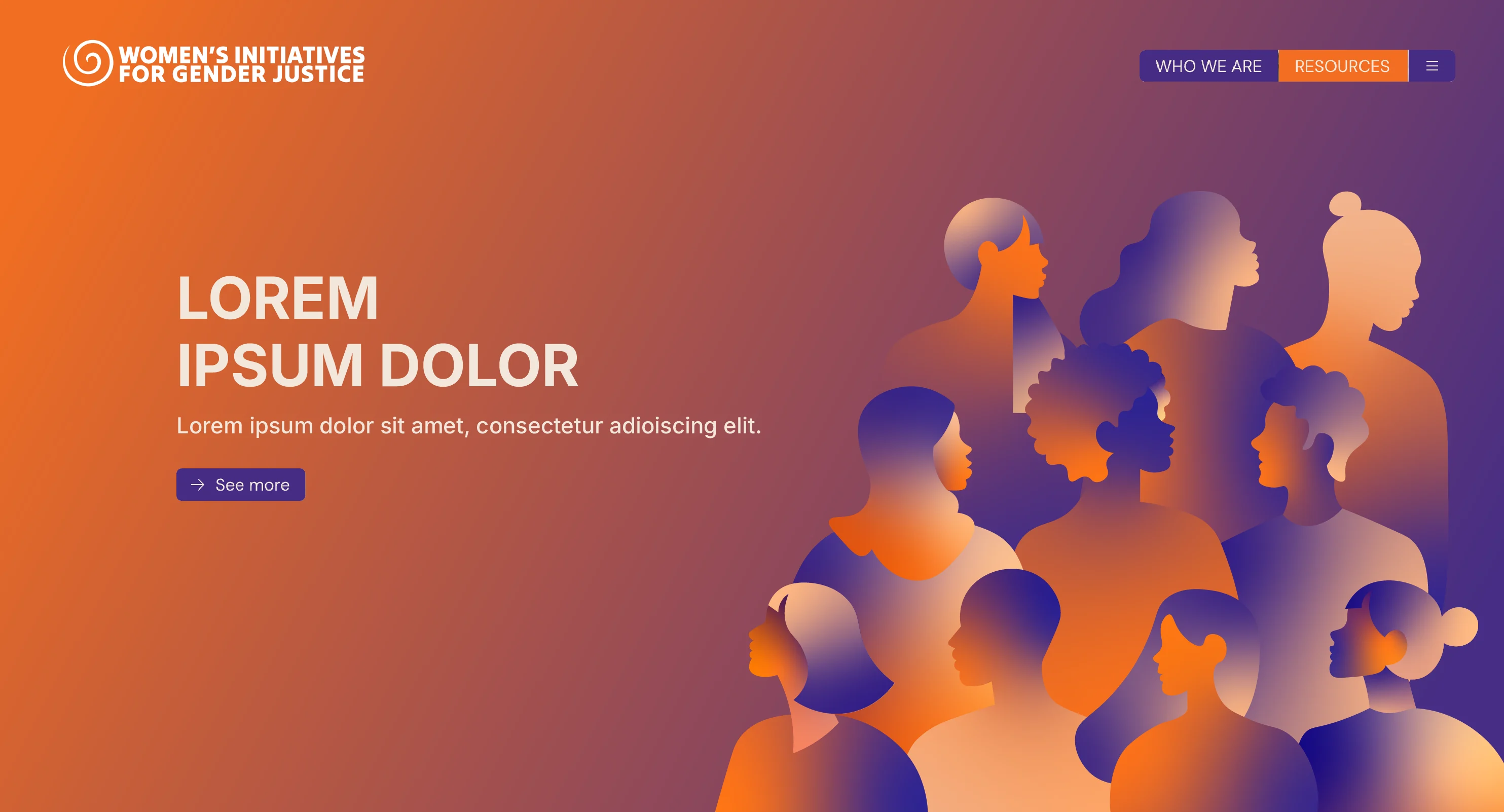
I explored the same composition in different balances of the palette before settling on the treatment that now runs through the website and publications.
Colour exploration · concept stage
Designed to sit alongside the message.
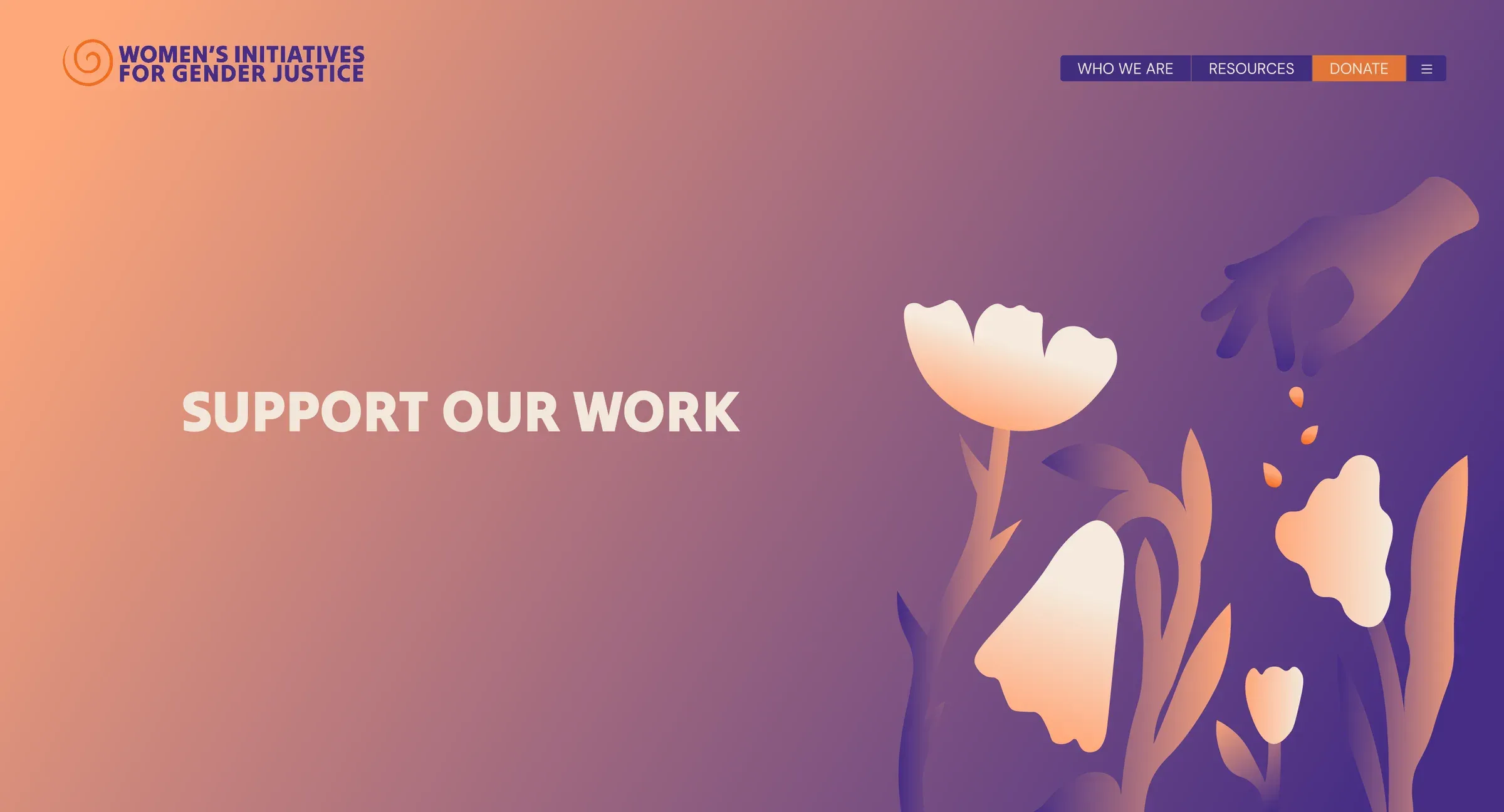
The website illustrations balance expressive imagery with space for the message. Their compositions leave room for headlines and introductory text, while a consistent visual treatment connects the organisation’s different areas of work.
Website illustration in context.
Individual elements. A connected system.
Alongside the finished compositions, I created a small library of reusable elements that the team could use to build further illustrations. The collection provides a shared visual foundation while leaving room for new combinations.
Figure, arms raised
Megaphone
Flower
Open hand
Figure, reaching
Figure on an open book
A visual pause. A clear new chapter.
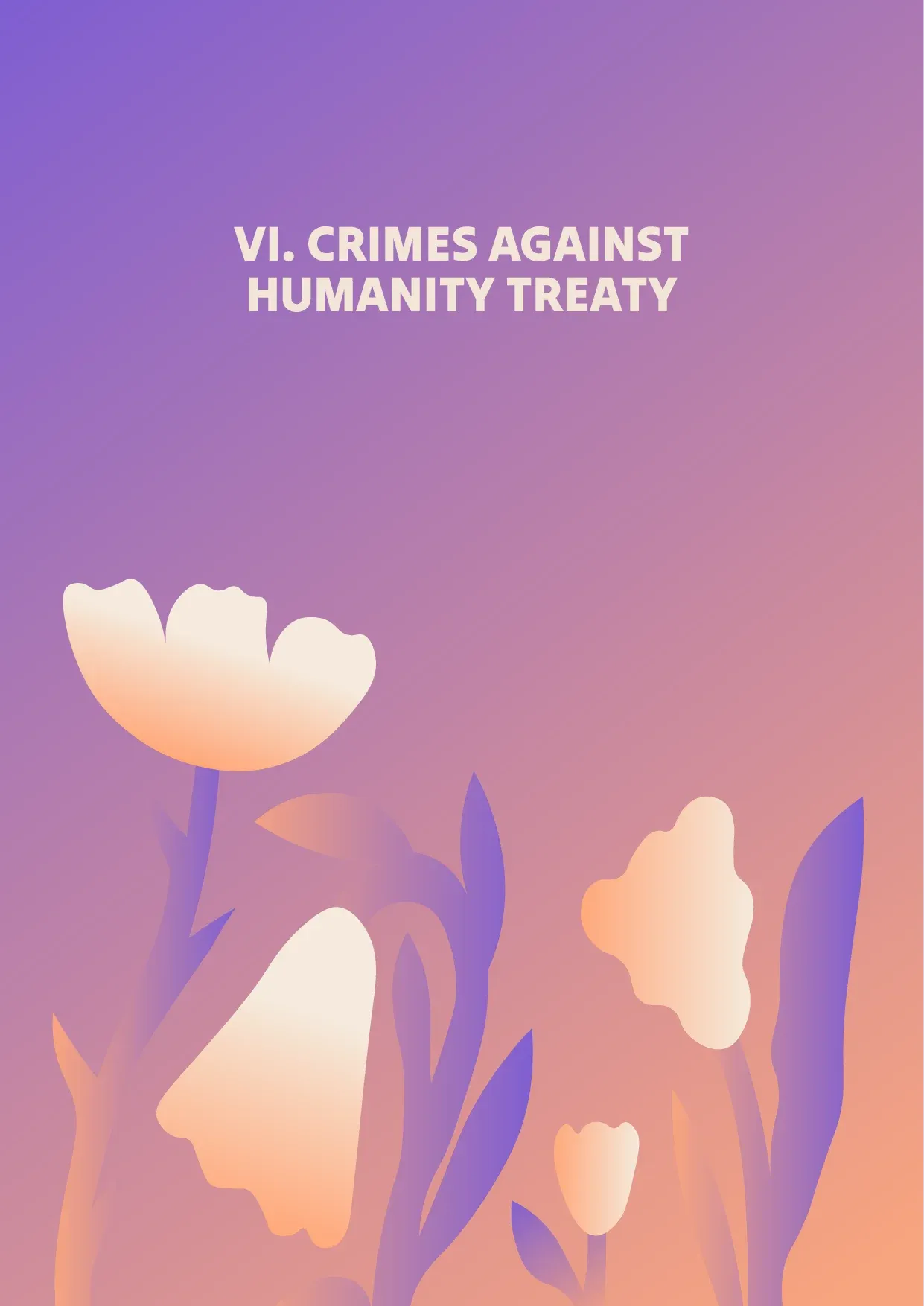
The chapter dividers extend the illustration language into long-form publications. Each opening gives its subject a distinct image, while shared typography, colour and composition hold the series together.
Architectural forms sit alongside symbolic imagery and human figures, creating a recognisable rhythm between sections.
I. INTERNATIONAL CRIMINAL COURT
IV. UN INVESTIGATIVE MECHANISMS
VII.SPOTLIGHT: INTERSECTIONAL JUSTICE
VIII. GUEST CONTRIBUTION
One visual language, across formats.
Recurring figures, shapes and colour treatments connect the website imagery with editorial applications. The compositions change with the format, while the visual language remains recognisable.
Website applicationPublication chapter divider
Making room for the detail.
The publications bring together long passages of text, layered headings, references, recommendations and practical tools. My work focused on organising these different types of information into consistent layouts, with clear distinctions between the main narrative and supporting material.
Working across InDesign and Word, I designed and formatted the documents to suit the requirements of each publication.
Intersectional Justice
A Practical Guide for the Rome Statute System
June 2026 · Microsoft Word · 43 pages
CoverEnlarge
Part opener · p. 23EnlargeText spread with a set-off legal quotation and footnotes · pp. 4–5EnlargeTable and structured guidance · p. 17Enlarge
1 / 3
Survivor Engagement Protocol
Practical Standards for Engagement in Advocacy and Policy Spaces
Microsoft Word · 23 pages
With Synergy for Justice and the Global Initiative Against Impunity; co-funded by the European Union
Section opener with lettered contents · p. 7
Judicial Approaches to Sexual and Gender-Based Crimes at the International Criminal Court
Structural Shortcomings, Critical Improvements and Future Possibilities of Intersectional Justice
December 2023 · Adobe InDesign · 136 pages
Two-column spread with footnote bands · pp. 14–15
Sexual Violence and Stigmatisation of Victims
NGO Shadow Report on the Implementation of the Council of Europe Convention on Preventing and Combating Violence against Women and Domestic Violence in Ukraine
July 2024 · Microsoft Word · 55 pages
With EHRAC, La Strada Ukraine, ULAG and Equality Now; for submission to the GREVIO Committee
Table of contents across four heading levels · p. 3
Hierarchy
Chapter title, subheading, quoted article and body text · Ukraine shadow report, p. 17Enlarge
References
Footnotes held in a band beneath the two-column narrative · ICC report, p. 22Enlarge
Practical information
Practical checklist · Survivor Engagement Protocol, p. 21Enlarge
Beyond the page.
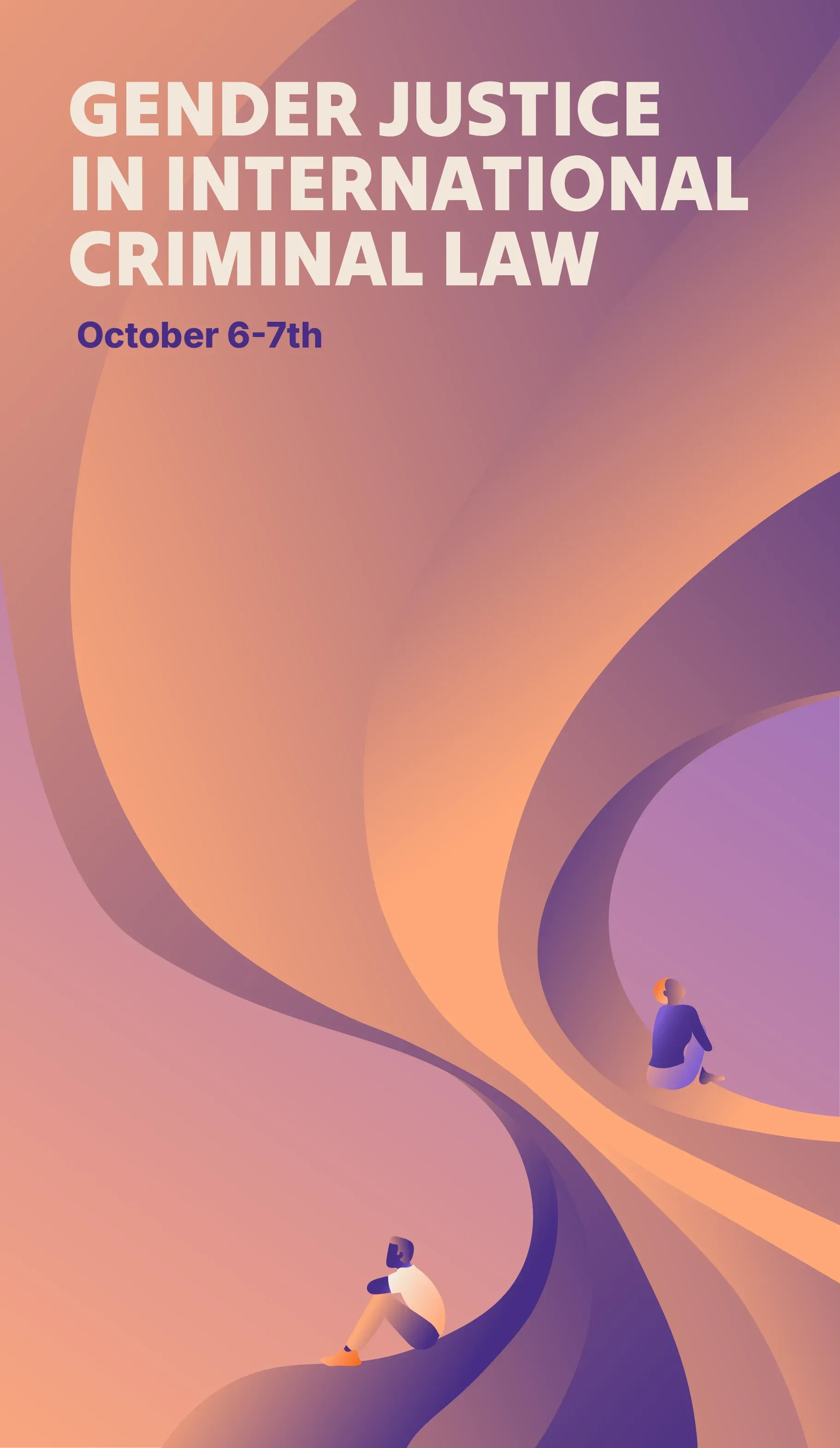
The same visual vocabulary also appears in conference communication, adapted to a vertical format with a clear typographic hierarchy.
Conference poster: Gender Justice in International Criminal Law
A connected body of work.
Across website illustrations, reusable elements and publication design, the work brings a consistent visual approach to different communication needs. Expressive images establish a recognisable presence, while structured layouts give detailed material room to be read.
Let’s talk
Important ideas deserve thoughtful design.
We create illustration systems and publications that give complex content a clear, distinctive form.